
A land of rock-hewn churches, ancient kingdoms, and living faith traditions found nowhere else on Earth.
Ethiopia is unlike anywhere else in Africa — the only nation on the continent never colonized, home to an ancient Orthodox Christian tradition dating back to the 4th century, and birthplace of eleven medieval churches carved directly from solid rock at Lalibela.
Beyond its sacred sites, Ethiopia offers the otherworldly volcanic landscapes of the Danakil Depression, the ancient obelisks of Axum, and a coffee culture that gave the world its favorite drink.
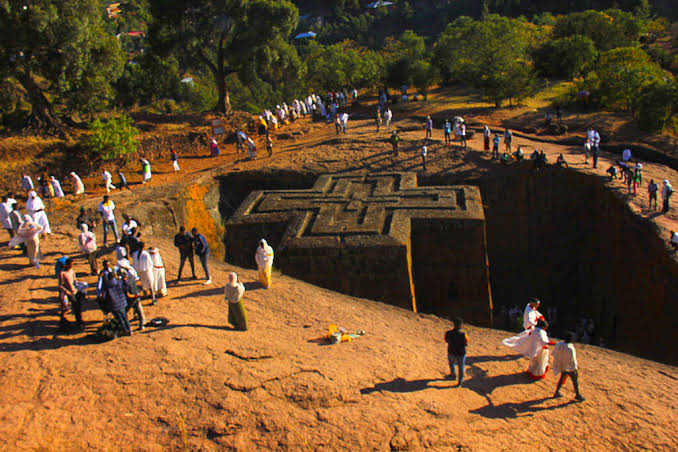
Eleven medieval churches carved entirely from solid volcanic rock, still an active pilgrimage site for Ethiopian Orthodox Christians.
One of the hottest and lowest places on Earth, with sulfur springs, salt flats, and active volcanoes.
The ancient capital of the Aksumite Kingdom, home to towering obelisks and, by tradition, the resting place of the Ark of the Covenant.
Knowledgeable local guides fluent in the history and living traditions of Ethiopian Orthodox sites.
Carefully selected accommodations in Lalibela, Axum, and Addis Ababa.
Seamless connections between historic sites spread across the northern circuit.
Experienced local teams and permits for safe travel into the remote Danakil Depression.
The Rock-Hewn Churches Experience
Addis Ababa, Lalibela & Axum
Historical Circuit & Danakil Depression
Cover shoulders and knees when visiting rock-hewn churches; shoes are removed before entering some sites.
Ethiopia follows its own calendar, roughly 7-8 years behind the Gregorian calendar — worth planning around for festivals.
Addis Ababa sits at high altitude; drink plenty of water and allow a day to acclimatize.
October to March, the dry season, is the best time to visit — clear skies for exploring Lalibela and Axum, and comfortable trekking conditions in the Simien Mountains.
Addis Ababa Bole International Airport (ADD) is a major African hub with extensive connections across Africa, Europe, the Middle East, and Asia via Ethiopian Airlines.
Domestic flights are the most practical way to reach Lalibela, Axum, and Gondar; road travel between northern sites is possible but slower given mountainous terrain.
Ethiopia offers an e-Visa system for most nationalities, processed online in advance of travel. Requirements can change, so please confirm current visa policy via Ethiopia's official e-Visa portal before booking. Travel to the Danakil Depression additionally requires a permit, which we arrange as part of that itinerary.
The local currency is the Ethiopian Birr (ETB). Cards are accepted at larger hotels in Addis Ababa but rarely elsewhere, so carrying sufficient cash is essential when traveling regionally.
Spongy sourdough flatbread served with spiced stews of lentils, vegetables, or meat.
Ethiopia's iconic spiced chicken stew, often considered the national dish.
Minced raw or lightly cooked beef seasoned with spiced butter and chili.
Fresh-roasted, ground, and brewed coffee served as a cherished ritual of hospitality.
A focused pilgrimage to the rock-hewn churches of Lalibela, one of Christianity's most sacred living sites.
View ItineraryAddis Ababa, Lalibela, and the ancient obelisks of Axum on Ethiopia's classic historical route.
View ItineraryThe main tourist circuit (Addis Ababa, Lalibela, Axum, Gondar) is generally safe and well-traveled.
Requirements vary by traveler and itinerary; please consult your doctor or a travel health clinic before departure.
A 5-day trip covers Lalibela and Addis Ababa; 9-14 days allows for the full northern historical circuit and/or the Danakil Depression.
Fill out the details below and our travel specialists will create your dream itinerary.