
Stand before the last surviving wonder of the ancient world and sail the timeless waters of the Nile.
Egypt is home to the last surviving wonder of the ancient world, the Great Pyramids of Giza, and to a civilization whose temples, tombs, and hieroglyphs still line the banks of the Nile after five millennia.
Beyond the pharaonic monuments, Egypt holds deep spiritual significance across faiths — from Mount Sinai's biblical heritage to Cairo's historic Islamic quarter and Coptic Christian churches.
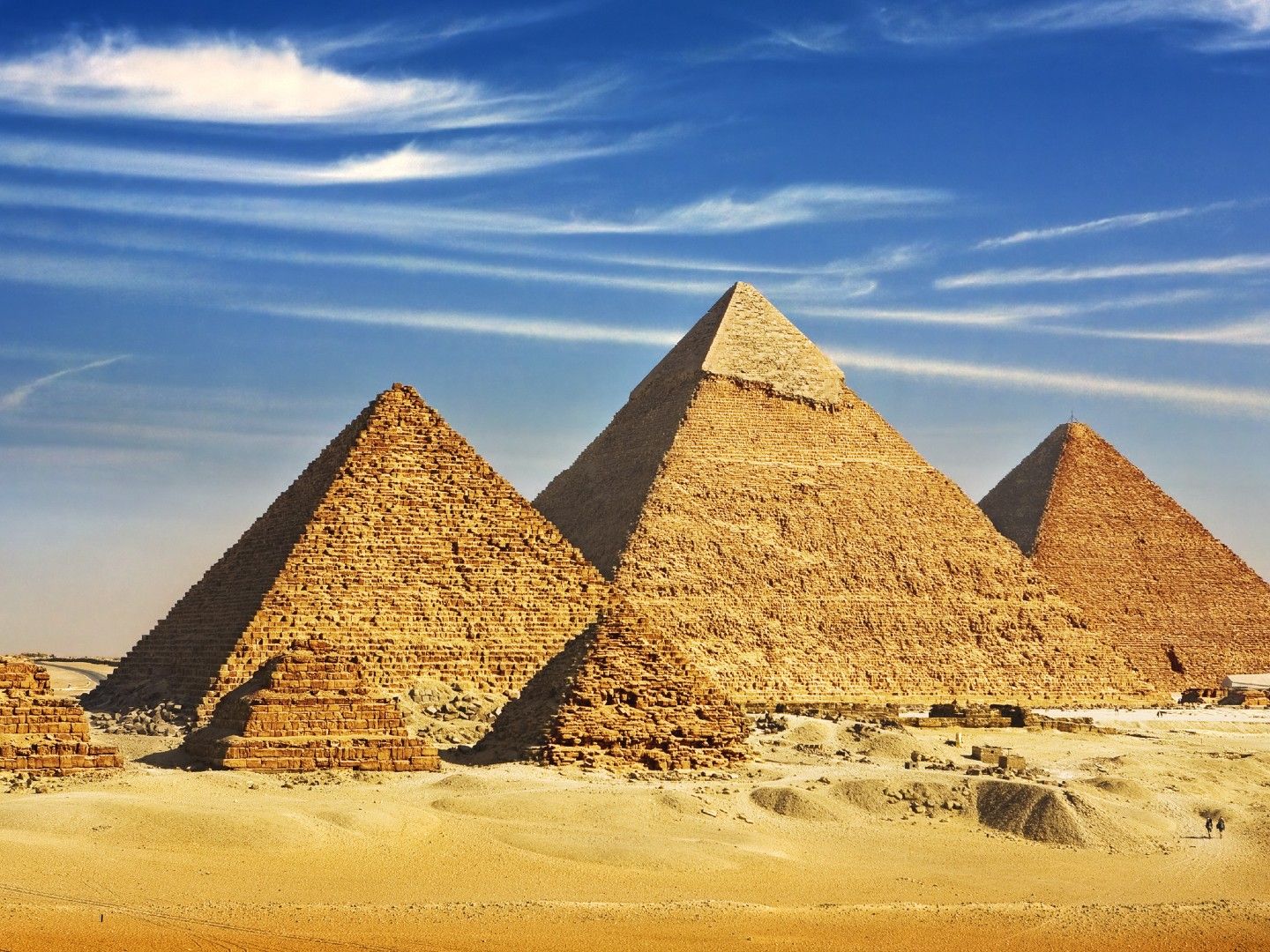
The last surviving wonder of the ancient world, alongside the enigmatic Great Sphinx guarding the Giza Plateau.
The open-air museum of ancient Thebes, home to the vast Karnak Temple complex and the royal tombs of the Valley of the Kings.
A leisurely sail between Luxor and Aswan, passing temples, riverside villages, and timeless desert scenery.
Licensed Egyptologist guides who bring the temples and tombs to life with expert historical context.
Handpicked Nile cruise vessels between Luxor and Aswan, from classic to deluxe.
Hotels with pyramid views in Giza and Nile-front stays in Luxor and Aswan.
Priority entry arrangements at major sites to make the most of your time.
Pyramids, Sphinx & Egyptian Museum
Cairo, Luxor & Aswan with Nile Cruise
Cairo, Nile Valley & Red Sea
Visit outdoor sites like Giza and Karnak early morning to avoid the midday sun, especially May-September.
Modest clothing is appreciated at mosques, churches, and in local communities.
Small Egyptian Pound notes are useful for tipping (baksheesh), a customary practice throughout Egypt.
October to April is the ideal window, with comfortable daytime temperatures for exploring Giza, Luxor, and Aswan. Summer months (June-August) bring intense heat, especially in Upper Egypt.
Cairo International Airport (CAI) is Egypt's main gateway, with extensive connections from Europe, the Middle East, Asia, and North America.
Domestic flights connect Cairo, Luxor, and Aswan quickly; Nile cruises are a scenic way to travel between Luxor and Aswan, and private guided transfers handle city transport.
Egypt offers visa-on-arrival and e-Visa options for many nationalities, typically straightforward to obtain. Requirements and fees vary by nationality and can change, so please confirm the latest visa policy via Egypt's official e-Visa portal before booking travel.
The local currency is the Egyptian Pound (EGP). Cards are accepted at hotels and larger shops in major cities, but cash is essential for markets, small vendors, and customary tipping.
A hearty mix of rice, lentils, pasta, and spiced tomato sauce, considered Egypt's national dish.
Stewed fava beans, a beloved Egyptian breakfast staple.
A leafy green stew, traditionally served over rice with chicken or rabbit.
Fava-bean falafel, a popular street food snack.
The Great Pyramids, the Sphinx, and the treasures of the Egyptian Museum in a focused Cairo introduction.
View ItineraryCairo, a 4-night Nile cruise, Luxor's temples, and the Valley of the Kings on Egypt's classic route.
View ItineraryYes, the main tourist areas (Cairo, Giza, Luxor, Aswan, Red Sea resorts) are well-established for tourism with a strong security presence at major sites.
Yes — a Nile cruise between Luxor and Aswan is one of the most memorable ways to see multiple ancient temples in comfort.
A 5-day trip covers Cairo and Giza; 10-14 days allows time for a full Nile Valley itinerary including Luxor, Aswan, and the Red Sea.
Fill out the details below and our travel specialists will create your dream itinerary.