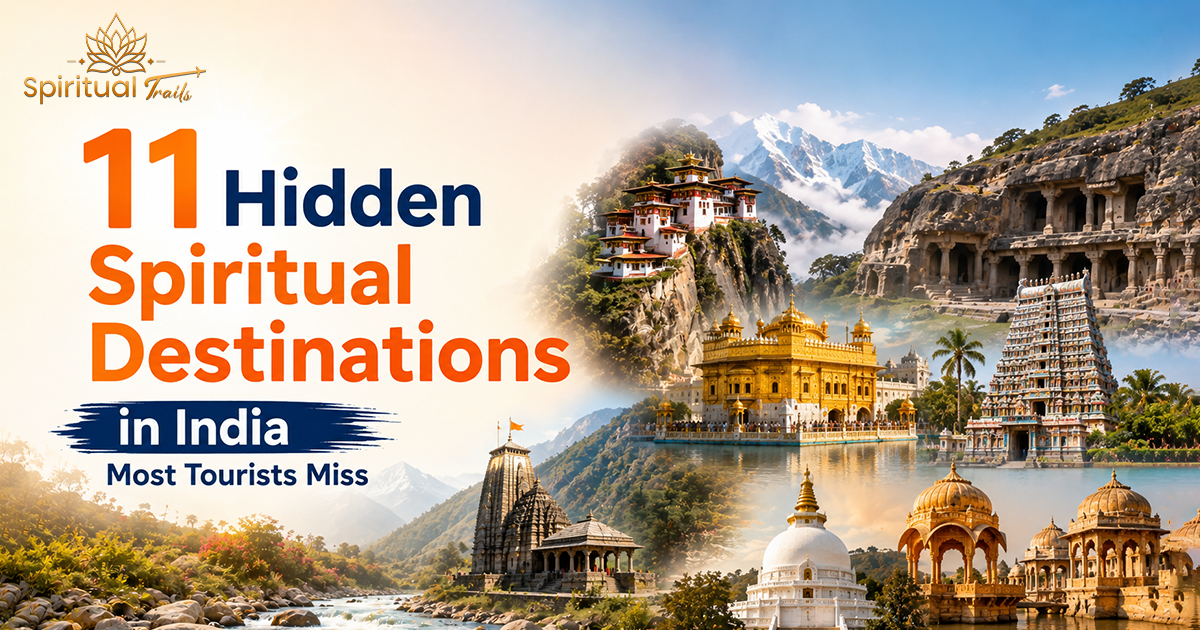

Everyone knows the famous temples. Everyone follows the same routes. Everyone waits in the same long queues.
But here's the thing—Spiritual Tourism in India isn't always about standing shoulder to shoulder with thousands of visitors while trying to catch a fleeting glimpse of a sacred shrine. Sometimes, the most profound moments arrive quietly, tucked inside an ancient stone corridor, beside a silent riverbank, or beneath a weathered tree where the only sound is the breeze carrying centuries of whispered prayers.
That's exactly where Spiritual Trails believes the real journey begins.
Take Hampi, for example. Most travellers rush toward its celebrated monuments, cameras clicking every few seconds. Fair enough. They're remarkable. Yet wander just a little farther and you'll stumble upon forgotten shrines resting among giant boulders, where a lone priest might still light an evening lamp without an audience. It feels less like visiting a monument and more like accidentally stepping into another century.
Quiet.
Now think about Bodh Gaya. The Mahabodhi Temple naturally draws pilgrims from across the globe, and for good reason. But the surrounding monasteries often tell a softer story. A Tibetan prayer wheel spinning gently. A Japanese meditation hall wrapped in silence. A monk reading beneath a tree while visitors pass without interruption. These aren't headline attractions. They don't need to be. Sometimes stillness says more than spectacle ever could.
That's the strange beauty of Spiritual Tourism in India. The places that don't shout often stay with you the longest.
Varanasi carries a similar surprise. Most people imagine packed ghats, blazing evening ceremonies and endless movement. They aren't wrong. Yet arrive before sunrise, wander away from the busiest stretches, and you'll discover smaller ghats where elderly locals perform quiet rituals, boats drift without urgency, and the Ganges reflects the first hint of daylight like polished copper. No loudspeakers. No hurry. Just presence.
Different.
The story continues in Madurai. While visitors naturally gravitate towards the magnificent temple complex, many overlook its quieter mandapams and peaceful corners. Sit for fifteen minutes. Watch families offer flowers without rushing. Listen to the rhythmic footsteps echo across centuries-old stone floors. It's oddly comforting—like opening an old family album where every photograph still feels alive.
Then there's Rishikesh, a destination many associate with yoga and adventure. That's certainly part of its charm. Yet beyond the bustling riverside cafés and busy suspension bridges lies another rhythm entirely. Smaller ashrams, early morning meditation spaces and peaceful stretches along the Ganga invite reflection rather than distraction. Nobody asks you to hurry. Nobody expects anything from you. You simply arrive, breathe, and let the place work quietly on your mind.
Frankly, that's becoming rare.
The Himalayas offer another reminder that sacred journeys don't always need grand ceremonies. A modest mountain temple reached after a slow walk often leaves a deeper impression than one visited from the window of a speeding vehicle. Crisp air replaces conversation. Pine forests replace traffic noise. Even your thoughts seem to slow down, as though the mountains politely insist that you stop carrying yesterday's worries.
Why does this matter?
Because modern travel often becomes a checklist. One attraction. Another selfie. Another hotel. Another destination crossed off a map. Spiritual travel refuses to follow that script. It asks you to linger. To notice. To feel something that can't be measured in photographs or social media captions.
That's why Spiritual Trails curates journeys that encourage travellers to explore these quieter dimensions of India's sacred heritage. Instead of racing between landmarks, the focus shifts towards meaningful encounters, authentic local traditions and moments of genuine reflection. The destination remains important, of course, but the experience between destinations often becomes the memory that lasts.
Look, there isn't anything wrong with visiting famous pilgrimage centres. They're famous because generations have found comfort, faith and inspiration there. But perhaps the richest stories aren't always waiting beneath the brightest lights. Sometimes they're hidden inside a peaceful monastery in Bodh Gaya, a forgotten shrine in Hampi, a tranquil riverside morning in Varanasi, a silent prayer hall in Madurai, or an unhurried meditation session in Rishikesh.
That's the heart of Spiritual Tourism in India.
Not chasing crowds.
Finding yourself.
And perhaps that's the greatest pilgrimage of all—one that Spiritual Trails invites every traveller to begin with open eyes, an open heart, and enough curiosity to wander just a little beyond the obvious.